
Grief
and its potential

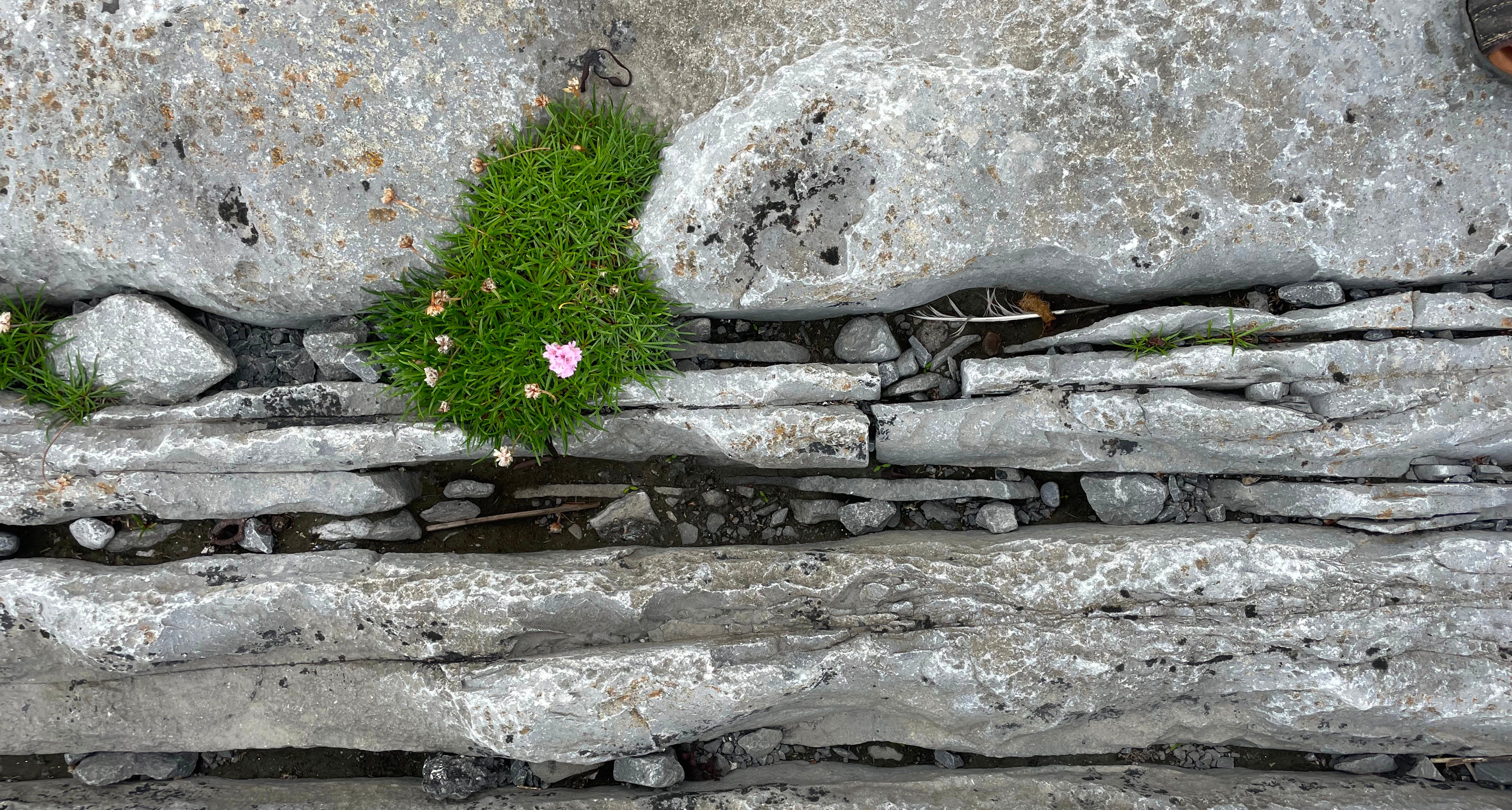
The current Imaginarium is on the theme of Power, and began with an observation from one of Starhawk’s substack posts: ‘The word ‘power’ comes from the Latin potere, related to potency and potential, to our ability to do, to think, to envision and imagine, to speak our truth. That kind of power is unlimited.’ Which is phrase enough to set my internal power radar tingling.
It seems to me that our experience of potency and potential changes over time. Take limestone, for example. How to see the potential of one urchin becoming instrumental in a vast limestone pavement?
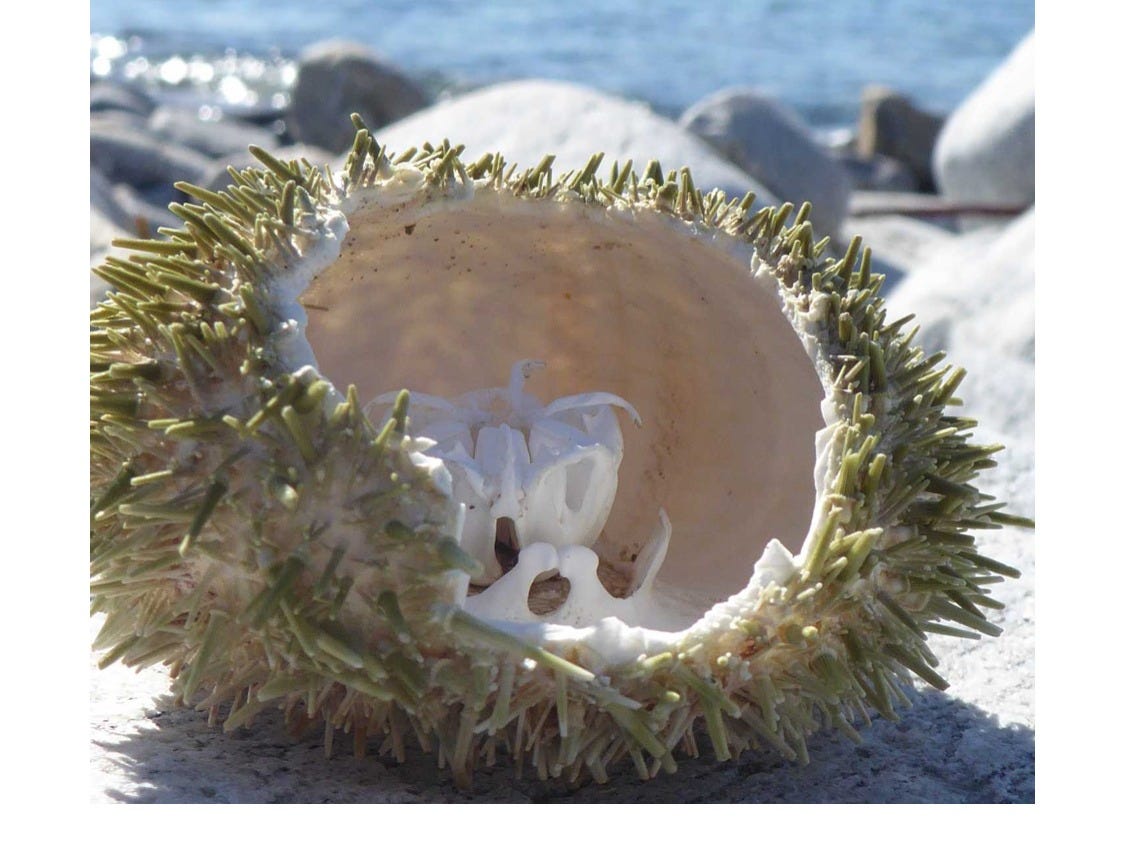
To see anything clearly, by which I mean seeing the wider congtext of a thing, we need to slow down, observe possibilities, pasts, and the tendrils of connection that have brought this thing into being at the same moment we’re there to observe it.
Slowing down is difficult for me. It goes against everything I’ve been taught about self-worth, societal value and efficiency. I know also that it’s increasingly important.
At the start of every calendar year I ask a question, which I write in the front of my paper diary to keep it live through the twelve months ahead. Or at least in a place I can go back and remind myself of it.
This practice, I think, rose from Rilke’s prompt: Be patient toward all that is unsolved in your heart and try to love the questions themselves, like locked rooms and like books that are now written in a very foreign tongue. Do not now seek the answers, which cannot be given you because you would not be able to live them. And the point is, to live everything. Live the questions now. Perhaps you will then gradually, without noticing it, live along some distant day into the answer.
My question for 2025 is ‘What does space give?’
At the eighth month of the year I feel answers might be forming.
One answer is: space gives the chance to mourn. I touched on some of this mourning in Echo Soundings posts written during, what I now call, the Winter of Grief. I mourned personal past failures and my fragile sense of self worth. I mourned (still mourn) the ongoing destruction of habitat, the resulting loss of birds and insects, my own dead beloved, the dead I don’t know, the insatiable human appetite for more, the causal consumerism of my culture, the numbness that comes with wealth and power over others. I mourned in a way that stopped me doing anything else very much when I had space to choose what I might do. My mourning forced me to occupy the space in a way that meant the space occupied me. It helped to know the practice of Non Violent Communication asks us to observe and honour our mourning, to give it time, to give ourselves time within it. All the same, I felt hollow, slow, heavy. It was an unpleasant space, and it seemed I had little choice but to be in it, until, perhaps inevitably, I changed, it changed.
That space lasted two or three months, maybe more. Like much these days, it didn’t map neatly onto recognisable timeframes. And of course that’s what makes such space so horrible to be in. So horrible I usually find ways to distract myself out of asap.
The next time I found myself in unexpected space was when I went to Sligo for two weeks in June. It was an unexpected offer of a holiday. We went with no expectations. No plans. And that meant we didn’t do very much. And in that space I met three new poems and the manifestation of an idea I’d been mulling over for a ‘long time’. I was fizzing with words and visuals of words. It was all very sweet and gentle, and I didn’t complain (as I have in the past) that these words weren’t edgy or textured enough. I just said hello, welcome, to them. Nice to see you here. And it was.
These letters are the prototypes for the next phase that needs yet more space to be formed, made ready for the Riso printer. I’m hoping that’ll happen before the end of the year…
Anyway, not to run ahead of myself. Back to grief. I think I needed to acknowledge the grief, live the mourning (that so much of our world doesn’t want me to feel) to know what is important to me, what is living within me.
Someone* wrote (and I probably misquote) humans are the universe coming to know itself. I can’t know the universe objectively. I can only know anything through the lens that is my body (and all its cultural weight), my society and my environment. And space is an opportunity for knowing how the internal and external universes are distinct and interconnected.
How can we see potential of ourselves within the spinning, sparking universe, unless we are resting, a momentary point of stillness in the chaotic motions? If this is even possible, and not only a metpahorical rest, it isn’t intended to suggest rest as a tool for growth. Rest is a place of potential in itself. The idea being as valuable as the action.**
There’s no knowing what will rise in any given space. Its amorphousness is what makes it a space and not a place. Ultimately I believe it’s simplest to say Hello, welcome, rather than No, thank you, which never seems to prevent the stuff that wants to wriggle through come what may. Grief is many things. Many people have written most beautifully about our experiences of it. It is as inevitable as pain and death. Perhaps, like anything, it holds the seed of life itself.
* If this sound familiar and you know wrote this, or what they wrote exactly, please let me know!
** I do struggle with this. Want to believe it. Want to live it, happily. Want to trust the immeasurable collective spirit that lies within this idea.
*** A heartwarming podcast with Joanna Macy on despair
I love the idea of having a question for the year. I wonder if you have read The Clearing by Samantha Clark (she’s on here but for some reason I can’t link to her). It’s a memoir that explores the space between things and would, I think, very much speak to your question.